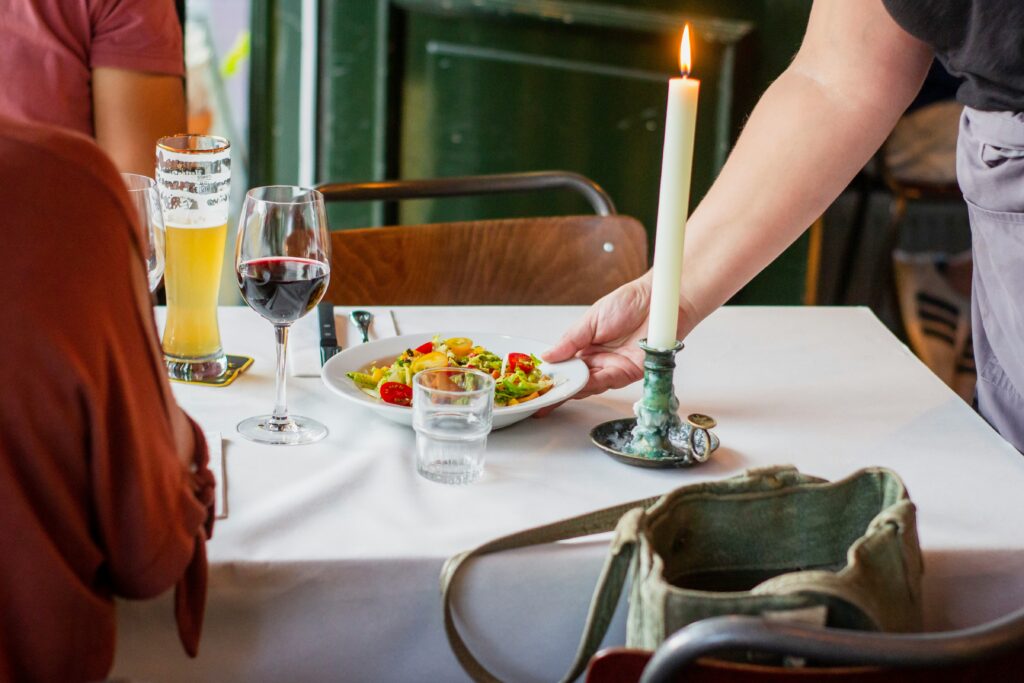
Going to a restaurant, whether for a special occasion or a casual dinner, requires a minimum amount of attention to the rules of etiquette. Restaurant etiquette is a combination of respect for those accompanying us, the service staff, and other customers. However, we’re not always aware of the most common mistakes that risk ruining the experience, both for ourselves and others. That’s why today I thought I’d address this topic by looking at proper restaurant behavior and the lapses in style that should absolutely be avoided.
How to Behave at a Restaurant: Tips, Rules, and Mistakes to Avoid
Before entering: reservations and punctuality
Two of the key aspects of enjoying a pleasant experience when dining out are managing reservations and punctuality.
- Always book if possible: Even if the restaurant doesn’t explicitly require reservations, it’s good practice to always call to confirm availability. Booking shows organization and respect for the restaurant’s management, while also avoiding unnecessary waits.
- Being punctual: Arriving late is one of the most common and, in my opinion, most serious shortcomings. If the delay is unavoidable due to an unexpected event, notify the restaurant; it’s a sign of courtesy, good manners, and respect for the restaurant’s employees.
How to Introduce Yourself to a Restaurant: Dress and Attitude
Whether you like it or not, the way we present ourselves is our first calling card. At a restaurant, as in any other situation.
- Appropriate Attire: There’s no hard and fast rule, but it’s essential to adapt your look to the type of establishment. A Michelin-starred restaurant requires elegance, while an osteria allows for more casual yet elegant attire. In general, I recommend avoiding flip-flops and overly sporty or sloppy clothing.
- Polite Attitude: From the moment you enter, maintaining a moderate tone of voice and a composed demeanor is essential. Never complain loudly or be arrogant toward the staff. Remember, they’re working, not there to have fun; treat them with the same respect you would expect.
Table Manners: Essential Etiquette
Table manners are the heart of restaurant etiquette. Here are some rules to put into practice immediately and never abandon:
- Wait before starting: Don’t start eating until everyone has received their plate. On the other hand, if there’s a long delay in receiving your plate, it’s correct to tell others to start without you.
- Place cutlery correctly: Cutlery has its own language. During the meal, it should be placed on the plate in an orderly fashion, while at the end, it should be arranged parallel to the plate, preferably vertically in front of you. This also helps waiters understand that you’re finished and can start preparing the next course, as well as clearing your plate and dirty cutlery.
- Don’t talk with your mouth full: It’s a rule we learn as children but often forget. Talking while chewing is not only rude and unpleasant, but also inelegant.
- Don’t gesticulate with your cutlery: Moving your forks and knives while speaking is another very common mistake, but one that should be avoided. Come on, hold back, it’s not polite or even classy.
How to Interact with the Waiter’s Staff
Establishing a good relationship with waiters and sommeliers is equally crucial for a pleasant and positive lunch or dinner at a restaurant.
- Be Courteous and Patient: Remember that the staff is there to serve you and handle multiple requests. Demanding immediate attention or appearing impatient is a sign of poor manners.
- Don’t Snap Your Fingers: An unforgivable mistake that I’ve never understood is rudely getting the waiter’s attention by snapping your fingers or raising your voice. A discreet nod is enough; you don’t come across as rude.
- Accept Suggestions: If you’re unsure about what to order, accepting the waiter’s or sommelier’s suggestion can enrich the experience. If the suggestion doesn’t suit your tastes, you can politely decline; it’s still preferable to an arrogant attitude. Don’t you think?
How to Behave at a Restaurant When Paying the Bill
At the end of the meal, even paying the bill has its own rules of etiquette.
- Ask for the bill discreetly: Don’t stand up and yell for the waiter; wait for the right moment to signal.
- Split the Bill Elegantly: Unless you’re in a situation where one of the diners wants to pay, it’s a good idea to discuss splitting the bill before asking for it. Doing so in front of the waiter is not appropriate and slows him down by having to wait for you.
- Leave a Tip: Although tipping is not mandatory in Italy and is rarely used, it’s still a gesture of courtesy and appreciation for the service received. The tip should be 5-10% of the total bill.
Using the phone: the number one enemy of etiquette
And here’s where the heavens break loose, because we all do it, knowing it’s one of the most common mistakes in restaurant etiquette. What more can I say than to at least follow these guidelines:
- Silence your phone: Leaving the ringer on is a sign of rudeness, especially in more formal settings. Silence it—it doesn’t take much.
- Limit photos: Taking a photo of your food these days can be acceptable, but don’t turn the meal into a photoshoot. You shouldn’t disturb other diners with loud shots, blinding flashes, or endless posing.
- Don’t make phone calls at the table: Generally, making or answering a call during a meal is always discouraged. If it’s essential, apologize, get up politely, and answer the phone away, preferably outside the restaurant.
How to Behave at a Restaurant: Mistakes to Avoid
Finally, I’ll leave you with all the mistakes to avoid, as diligently as possible, so that no one ever has anything to say about your manners and table manners.
- Excessively modifying dishes: Requesting variations to a dish is acceptable if you have food intolerances or preferences, but avoid completely overhauling a recipe. Instead, choose another one entirely.
- Don’t waste food: Ordering more than you can eat is a common mistake. If you have leftovers, it’s better to ask for a doggy bag than to waste food.
- Avoid inappropriate comments: Loudly criticizing the food or comparing it to that of other restaurants is a sign of bad taste. If there’s a problem with the dish, you can politely point it out to the waiter.
- Don’t overdo it with alcohol: Drinking in moderation is always the best option, especially if you’re attending a formal or business dinner.
- Using napkins incorrectly: The napkin is meant to gently wipe your lips or fingers, not to wipe sweat or clean cutlery and glasses. It should be placed on your lap during the meal and left folded on the table afterward.
- Mishandling diners or staff: Being rude or raising your voice, whether towards your fellow diners or staff, is one of the most serious mistakes and a sign of great rudeness. Even if something isn’t right, address the problem calmly and politely.
- Leaving an excessive mess: It’s normal for the table to be messy during a meal, but avoiding scattering crumbs everywhere, dismantling the tableware to make avant-garde creations, or leaving crumpled napkins is a sign of respect.
- Disrespecting other diners: Talking too loudly, monopolizing the conversation, or constantly interrupting are rude behaviors. Remember that a meal is a time for sharing.
- Taking from someone else’s plate without permission: Taking food from someone else’s plate, even a friend or family member, is inappropriate unless invited.
- Noisy eating: Noisy chewing, sucking on a spoon, or making noise while drinking are habits that could disturb other diners. I hate them so much that I no longer want to eat at the table with those who do them.
- Wearing unpleasant odors: Avoid excessive perfumes or clothing with strong odors (e.g., smoke or dirty smells) that could interfere with others’ enjoyment of food.
- Failing to observe hygiene rules: Wash your hands before sitting down and do not touch food with your hands unless necessary (e.g., bread or finger foods).
- Keeping your hat or coat at the table: Leave these items on the hanger or in a designated area. Leaving them on your person or draped over your chair is considered impolite and uncomfortable.
Children at Restaurants: Tips for Managing Them Effectively
Children at restaurants can transform a meal into an unforgettable experience, for better or worse. If carefully managed, they can enjoy lunch or dinner with adults without disturbing other customers. However, when parents underestimate the importance of their little ones’ behavior, the risk of creating disruptions increases. Here are some rules and tips for successfully managing children at restaurants.
- Choose a suitable venue: Opt for family-friendly restaurants, perhaps with dedicated areas or children’s menus, and avoid overly formal establishments where silence is almost mandatory.
- Educate children before leaving: Explain and teach them what is expected of them at the restaurant. For example: speak softly, remain seated, and respect those around them.
- Bring entertainment: Books, quiet games, or crayons can help children stay engaged while waiting without disturbing others.
- Avoid letting children run around: Letting children run between tables is dangerous for staff and disruptive to other customers. They should remain seated or, if they need to move, be accompanied outside by an adult.
- Manage tantrums discreetly: If your child starts crying or throwing a tantrum, take them outside to calm them down. Avoid raising your voice or yelling at them at the table in front of everyone, as this can create further chaos and discomfort.
- Don’t use your phone or tablet with the volume turned up: If electronic devices are necessary, make sure they are muted or that your child uses headphones.
How to Behave at a Restaurant: Mistakes to Avoid with Children
- Ignoring Their Behavior: Allowing children to make noise, touch things they shouldn’t, or disturb other tables is disrespectful to the restaurant and other customers.
- Underestimating Wait Times: Children have little patience. Ordering something simple right away, like bread or an appetizer, can help them manage their time better.
- Not Adapting to the Menu: Bringing food from home is acceptable only if the child has specific needs (e.g., allergies), but it’s best to notify the restaurant in advance.
- Leaving a Mess: Picking up at least the most obvious waste, such as napkins or dropped food, is a courtesy to the staff.
Conclusion
Eating at a restaurant is not only a pleasure but also an opportunity to demonstrate good manners and respect for those around us. Knowing how to behave at a restaurant helps us avoid common mistakes, and following good etiquette allows for a pleasant and harmonious experience. With a few simple tips, you can transform a simple lunch or dinner into a moment of genuine conviviality where good taste, not only in the food, is also reflected in the manners.
Recent Posts
-
 Real maternity: What We Left Behind When We Choose to Take Care Of
 -
 Dream Cruise Vacations: The Wonders of the Caribbean
 -
 Ideas and Tips for an Unforgettable Summer
 -
 How to Protect Your Skin From the Cold
 -
 Quick, Protein-Packed, Healthy Dinner to Help You Slim Down: Nutritionist Blanca Martín’s 5-Minute Salad Recipe
 BBC News
- Inside the £3.25m castle bought by Celebrity Traitors winner Alan Carr February 28, 2026
- Formula 1's new golden age of celebrity may have just begun February 28, 2026
- Resident Evil Requiem's director on redefining the survival horror genre February 28, 2026
- Six things to look out for in tonight's Brit Awards ceremony February 28, 2026
- The strange British phenomenon of the snatched backseat picture February 28, 2026
- Neil Sedaka, singer of Breaking Up Is Hard To Do, dies at 86 February 27, 2026
- These filmmakers know exactly how to get you hooked on bizarre one-minute dramas February 27, 2026
- What the Warner Bros deal could mean for streaming, cinemas and news February 27, 2026
- I Swear director says Baftas 'let down' Tourette's campaigner February 27, 2026
- Presenter conquering fear of city she lived in during abusive marriage February 27, 2026
- Cruz Beckham launches music career, having fun amid family drama February 27, 2026
- How Hollywood and Maga aligned over Warner Bros deal February 27, 2026
- Jack Whitehall: Hosting the Brits is a 'genuine rollercoaster' February 27, 2026
- Ghosts TV sitcom brought back to life as a feature film February 27, 2026
- Williams leads supergroup in Brits tribute to Ozzy February 27, 2026