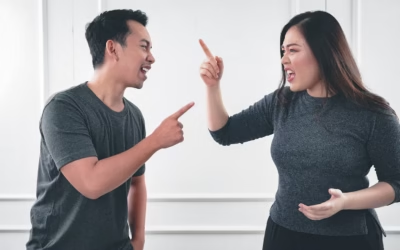
Insights from Psychologist Beatriz Galván
Sometimes, the hardest battles are the ones fought silently within – especially when someone consistently undermines your worth or questions your abilities. Learning to identify and confidently respond to these subtle attacks is essential not only for your self-esteem but for your overall mental well-being.
Why Do People Undervalue Others?
We all face moments where the people around us don’t fully acknowledge our strengths. According to psychologist Beatriz Galván, people who belittle or undervalue you often project their own insecurities or limitations onto you.
“Those who minimize your opinions or achievements are sending a clear message: they don’t consider what you say or do as valid. These behaviors often mask their own fears or gaps in knowledge,” Galván explains.
Recognizing this can be empowering — it shifts the focus from “Am I really at fault?” to “This is about their own issues, not me.”
Spotting the Signs: Are You Being Undervalued?
Sometimes, it’s hard to pinpoint what’s making you feel off in a conversation. Here are some common scenarios that might mean you’re being undervalued:
-
Subtle Dismissal Through Gestures or Words
An impatient wave of the hand or a sarcastic smirk can silently say, “What you’re saying doesn’t matter.” More overtly, direct comments that rank you “below” them in value or ability. -
Fixating Only on Mistakes
Everyone makes mistakes, but if the other person can only see your errors and ignores your efforts or successes, they are undermining your competence. -
Downplaying Your Achievements
Sharing something you’re proud of only to hear, “That’s easy, anyone could do that,” can chip away at your confidence over time. -
Dismissive or Humiliating Remarks
Cruel comments like “You don’t understand,” “That’s nonsense,” or “You’re clueless” are designed to silence you and make you doubt your ideas.
How to Respond When Someone Undervalues You
The way you respond can protect your self-esteem and mental health. Beatriz Galván offers a clear roadmap:
1. Own Your Feelings
First, acknowledge your emotions, frustration, hurt, or anger. Your feelings are valid, and accepting them helps you avoid burying emotional pain.
2. Regulate Your Emotions Before Responding
Pause to breathe and process. Avoid reacting defensively or impulsively. Calm, assertive responses come from self-control, not survival instinct.
3. Set Clear Boundaries
Express what is and isn’t acceptable clearly and politely. You don’t have to tolerate disrespect to keep the peace.
4. Protect Yourself Physically and Emotionally
If negativity is ongoing and damaging, create space or distance from that person. Sometimes the healthiest choice is to walk away.
5. Build a Supportive Network
Lean on friends, family, or colleagues who see your value and uplift you. Supportive relationships are vital buffers against emotional distress.
6. Prioritize Self-Care
Nurture your mind and body through good nutrition, exercise, hobbies, and positive self-talk. Self-care strengthens your resilience and self-worth.
Final Thoughts: Strengthen Your Confidence and Well-Being
Being undervalued can chip away at your confidence but it doesn’t have to. By recognizing disrespect, managing your emotions, setting boundaries, and seeking support, you take back control of your self-esteem.
Remember Beatriz Galván’s insight: often, others’ negative behavior reflects their own struggles, not your true worth. Stand firm, care for yourself, and surround yourself with positivity. You deserve nothing less.
Recent Posts
-
 Real maternity: What We Left Behind When We Choose to Take Care Of
 -
 Dream Cruise Vacations: The Wonders of the Caribbean
 -
 Ideas and Tips for an Unforgettable Summer
 -
 How to Protect Your Skin From the Cold
 -
 Quick, Protein-Packed, Healthy Dinner to Help You Slim Down: Nutritionist Blanca Martín’s 5-Minute Salad Recipe
 BBC News
- Organisers defend KPop gig after angry backlash over 'horrendous' concert February 20, 2026
- Sam Fender and Olivia Dean finally reach number one after 35 weeks February 20, 2026
- How Eric Dane gave his final months to 'moving the needle' on ALS February 20, 2026
- Taylor Swift and KPop stars dominated music in 2025 February 20, 2026
- Guitar played on Ghost Town up for auction February 20, 2026
- Woody and Buzz reunite in trailer for Toy Story 5 February 20, 2026
- Grey's Anatomy star Eric Dane dies at 53 after ALS diagnosis February 20, 2026
- The Grammy winner bringing traditional country to new audiences February 20, 2026
- What we learned from the first trailer for the new Peaky Blinders film February 19, 2026
- I thought being deaf would mean I couldn't be a dating show contestant - now I'm starring in one February 19, 2026
- Gaffe-ridden Olympic commentary prompts Italian TV chief to resign February 19, 2026
- Trainspotting star Robert Carlyle joins Line of Duty cast February 19, 2026
- Desperate hunt for breakthrough in Nancy Guthrie case turns to Mexico February 19, 2026
- 'Defining moment' as long-awaited Bristol arena named February 19, 2026
- Bad Bunny to make lead acting debut in film inspired by Puerto Rican revolutionary February 19, 2026