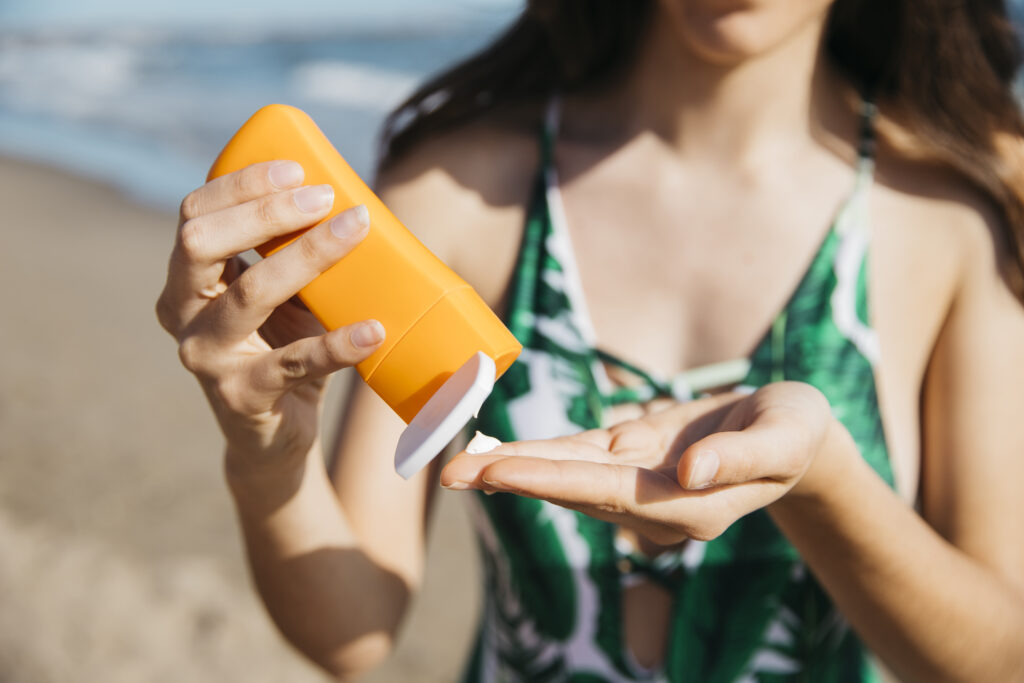
Vacations are coming up, and this summer you’re finally craving a perfect tan, free from sunburn, erythema, or peeling, while protecting your skin from the sun’s rays in the best possible way. Want to know how? Simply choose the perfect sunscreen for you, your skin type, and with the right SPF.
How to Protect Yourself from the Sun’s Rays With the Right Sunscreen?
Can proper sun exposure benefit our health? The answer is definitely yes. First and foremost, sunlight stimulates the production of serotonin, known as the “feel-good hormone.” But the sun is also beneficial for muscle tension, psoriasis, and other skin conditions. It also plays a crucial role in the production of vitamin D, which contributes to bone health and the immune system. However, excessive exposure, without proper protection, can lead to sunburn and even more serious problems. Therefore, using common sense and relying on a good sunscreen or sunscreen oil is the best way to achieve a beautiful, intense, and long-lasting tan without risking our skin.
What are UVB and UVA Rays?
The sun’s rays are divided into UVB and UVA rays. UVB rays are ultraviolet B rays, characterized by shorter wavelengths. The difference between UVA and UVB rays (ultraviolet A rays) is their longer wavelength. It is UVB rays that can cause skin inflammation and redness, especially in summer. UVA rays, on the other hand, promote premature skin aging. Both should therefore be protected with a protective sunscreen.
What are Phototypes?
The term “phototype” refers to a dermatological classification based on the quality and quantity of melanin present in the skin. It’s a true “skin identity card.” Six phototypes have been identified based on hair and eye color and the presence of freckles. Every part of the body has the same phototype; therefore, once you’ve identified your reference phototype, all you have to do is choose which sunscreen to buy.
How Sunscreens and Sunscreen Oils Work?
Sunscreens with filters complement hats, sunglasses, sarongs, and other clothing and accessories designed to protect the skin. There are two types of filters:
- So-called “physical” filters. Thanks to substances like zinc oxide, they reflect and scatter the sun’s rays.
- “Chemical” filters. Thanks to the organic molecules they contain, they tend to absorb the energy of solar radiation, returning it as heat.
Besides the beach, sunscreens and oils will be very useful if you love spending summers in the mountains or if you regularly practice outdoor sports. Thanks to Douglas’s online guide to sun protection, you can quickly find the right product for you. But don’t forget to apply daily facial protection, even when you’re not on vacation!
Why is Sun Protection Factor (SPF) Important?
What does the sunscreen’s sun protection factor (SPF) refer to? Known as SPF (Sun Protection Factor), it’s listed on cosmetics containing sunscreens. It allows you to choose the right product based on your skin type. The paler your skin, the more sensitive it will be to the sun’s rays; consequently, the higher the SPF should be. If your skin already appears sufficiently hydrated and tanned, an SPF of 15 may be sufficient. Your skin will benefit from 15 times greater protection than without using sunscreen. Products with higher protection (SPFs between 30 and 50) are recommended for people with fair skin or those who intend to spend extended periods of time in the sun.
Recent Posts
-
 Real maternity: What We Left Behind When We Choose to Take Care Of
 -
 Dream Cruise Vacations: The Wonders of the Caribbean
 -
 Ideas and Tips for an Unforgettable Summer
 -
 How to Protect Your Skin From the Cold
 -
 Quick, Protein-Packed, Healthy Dinner to Help You Slim Down: Nutritionist Blanca Martín’s 5-Minute Salad Recipe
 BBC News
- Inside the £3.25m castle bought by Celebrity Traitors winner Alan Carr February 28, 2026
- Formula 1's new golden age of celebrity may have just begun February 28, 2026
- Resident Evil Requiem's director on redefining the survival horror genre February 28, 2026
- Six things to look out for in tonight's Brit Awards ceremony February 28, 2026
- The strange British phenomenon of the snatched backseat picture February 28, 2026
- Neil Sedaka, singer of Breaking Up Is Hard To Do, dies at 86 February 27, 2026
- These filmmakers know exactly how to get you hooked on bizarre one-minute dramas February 27, 2026
- What the Warner Bros deal could mean for streaming, cinemas and news February 27, 2026
- I Swear director says Baftas 'let down' Tourette's campaigner February 27, 2026
- Presenter conquering fear of city she lived in during abusive marriage February 27, 2026
- Cruz Beckham launches music career, having fun amid family drama February 27, 2026
- How Hollywood and Maga aligned over Warner Bros deal February 27, 2026
- Jack Whitehall: Hosting the Brits is a 'genuine rollercoaster' February 27, 2026
- Ghosts TV sitcom brought back to life as a feature film February 27, 2026
- Williams leads supergroup in Brits tribute to Ozzy February 27, 2026